by Jeffery W. McKelroy
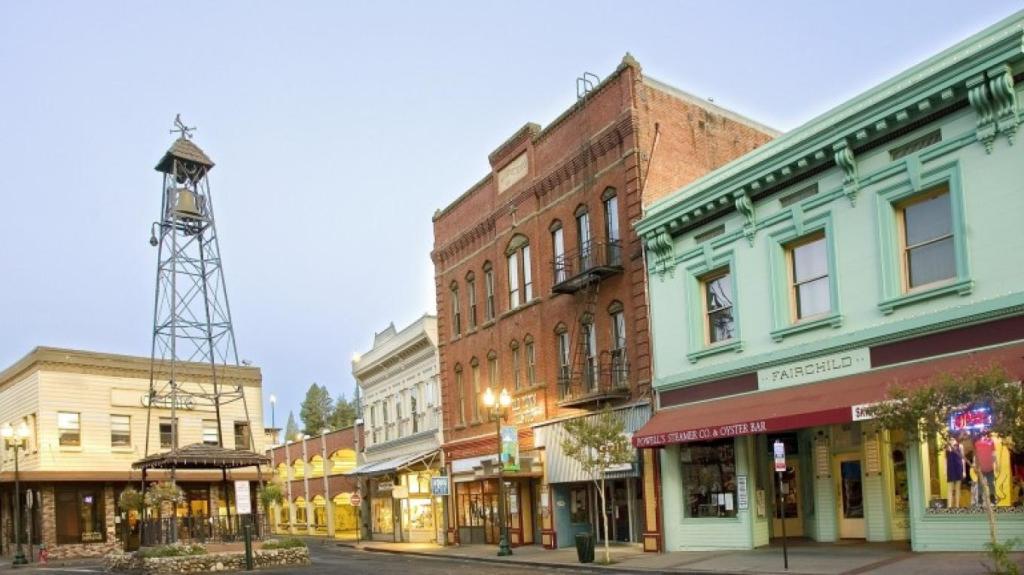
A short drive from Mokelumne Hill is the once infamous town of Placerville, better known at one time as Hangtown. Crime was a real problem in these remote mining towns and the citizens of Placerville were determined to keep the peace. In the mid-1880’s it was said that anything and everything could get you hanged in this town.
In 1848 James W. Marshall discovered gold in Coloma, California sparking the California Gold Rush. The nearby small town now known as Placerville was then called Dry Diggin’s after the manner in which the miners moved cartloads of dry soil to running water to separate the gold from it. Known as the “Road to the Comstock,” Old Dry Diggings boasted the first railroad to the area and the first Telegraph. Later in 1849, the town earned its most common historical name, “Hangtown”, due to the numerous hangings that had taken place there as a result of the lawless behavior of so many of its newcomers. The hangings began after five outlaws of the Owls Gang robbed a French Trading Post located in Log Cabin Ravine, now Bedford Avenue, in the Mother Lode mining district. They didn’t get away with it and were flogged 39 times. They were only flogged 39 times because 40 often was fatal. Three of the men were recognized as fugitives wanted for murder on the Stanislaus River and were tried and hanged by local miners at an oak tree at Elsner’s Hay Yard alongside Hangtown Creek. There are now markers placed all over town to mark the sites of the many numerous hangings. By the 1850’s, the Temperance League and a few local churches had begun to request that a more appropriate name be bestowed upon the town. The name was finally changed in 1854 when the City of Placerville was incorporated. At the time of its incorporation Placerville was the third largest town in California and in 1857 became the county seat. Two of the notable names in Placerville history are John Studebaker who rose to wealth building automobiles after manufacturing wheelbarrows for miners, and “Snowshoe” Thompson who carried mail over the Sierra to Carson City during the winter when no one else dared to.
Though the rough and tumble frontier days are over, and the outlaws and cowboys have long since gone to their graves, the violent past of the Gold Rush era still resonates in the many well preserved buildings from that time. In the light of day and in evening’s dreary gloom the ghosts of Placerville still walk the halls and stroll the streets refusing to go to their rest.
One of the most popular destinations for tourists seems to be one of the best places to find a ghost as well. In fact, the spirits are so active at the Cary House that word has gotten around and every year more and more people come looking for the spirits that are said to haunt the old hotel. The Cary House Hotel was built in 1857 as the vision of William Cary. The three-story brick building was said to be the most elegant hotel in Gold Country. The hotel was built with a brick façade and was as fireproof as possible, which was a unique quality in the old west. This was long before prefabricated iron facades were available. The hotel had 77 guest rooms and a bathroom on every floor which had hot and cold running water. Such luxury was unheard of in the west. The elegant lobby was well appointed with a grand staircase and finished with rich mahogany and cherry woods. Mr. Cary spared no expense. In the early years the Cary House was an important stage stop for travelers through Placerville. Nearly 90 million dollars in gold bullion passed through the Cary House from the Mother Lode and the Nevada Comstock. The Hotel was a popular meeting place for locals and politicians who on several occasions gave campaign speeches from the beautiful wrought iron balcony. The hotel changed hands many times and in 1911 was purchased by the Raffetto Family. In 1915 the grand building was demolished and then rebuilt with the same bricks to become the Hotel Placerville. In 1926 the name was changed to the Raffles Hotel which remained the name until the 1970’s when the Milton Family restored the historic landmark to its former elegance and returned its original name “The Cary House”.
The Cary House is said to be haunted by several spirits. One of these is known as Stanley. Stanley is a former Cary House desk clerk who was stabbed to death when he reportedly was caught in an illicit affair with another man’s wife. Her jealous husband saw them together and in a fit of rage killed Stanley on the grand staircase. Stanley was a ladies’ man in life, and it appears as though he continues to be in death. Witnesses claim that Stanley always takes a special liking to the female guests and will frequently touch them or pinch them, sometimes before they even get all the way into the hotel. His apparition has been seen on numerous occasions behind the front desk and on the staircase. Room 212 is reported to be the most haunted room in the hotel. The spirit of an old stagecoach driver who passed away in this room often appears to guests or is seen sitting in a chair looking out the window while smoking a cigar. Other strange occurrences include lights and electrical appliances turning themselves off and on and the antique elevator seems to like to roam up and down from floor to floor on it’s own.
There are many old theaters in historic downtown Placerville, most of which are now antique shops. One old theater now houses the Chamber of Commerce. The Chamber employees are very aware that their old building is the repository of restless spirits from beyond the grave. Over the years they have welcomed mediums, and paranormal investigators, eager to share with them their experience. Some of the employees have had personal brushes with the ghostly inhabitants in the downstairs administration office, usually when they are alone. The attic, now used for storage, was once the balcony of the theater and there have been several witnesses who claim to hear laughter and muffled voices in the dark. They say that the events are “creepy” but not menacing. The mezzanine that connects the first and second floor is the preferred haunt of a man with a beard, wearing a top hat that often appears to look out of the window before fading into the shadows. After viewing pictures of the old town hangman who died nearly 160 years ago some are convinced that he is the apparition they have seen. Coincidently most of the hangings he performed were carried out on the same property. In the upstairs conference room, the most photographed evidence seems to turn up in the form of spectral mists and glowing orbs.
At The Soda Works, a coffee shop and saloon located near the end of Main Street. The original owner can’t seem to let go. The business is built atop an unfinished mine that was used to store supplies. In the summer heat it served double duty as a morgue before there was refrigeration. The ghost, reputed to be that of the former owner, likes to turn on the bathroom taps and open and close doors throughout the building. He also likes to hang out at the upstairs bar. The current owner also periodically receives phone calls from the Soda Works late at night when no one is in the building. No one is ever on the line, at least no one who is alive.
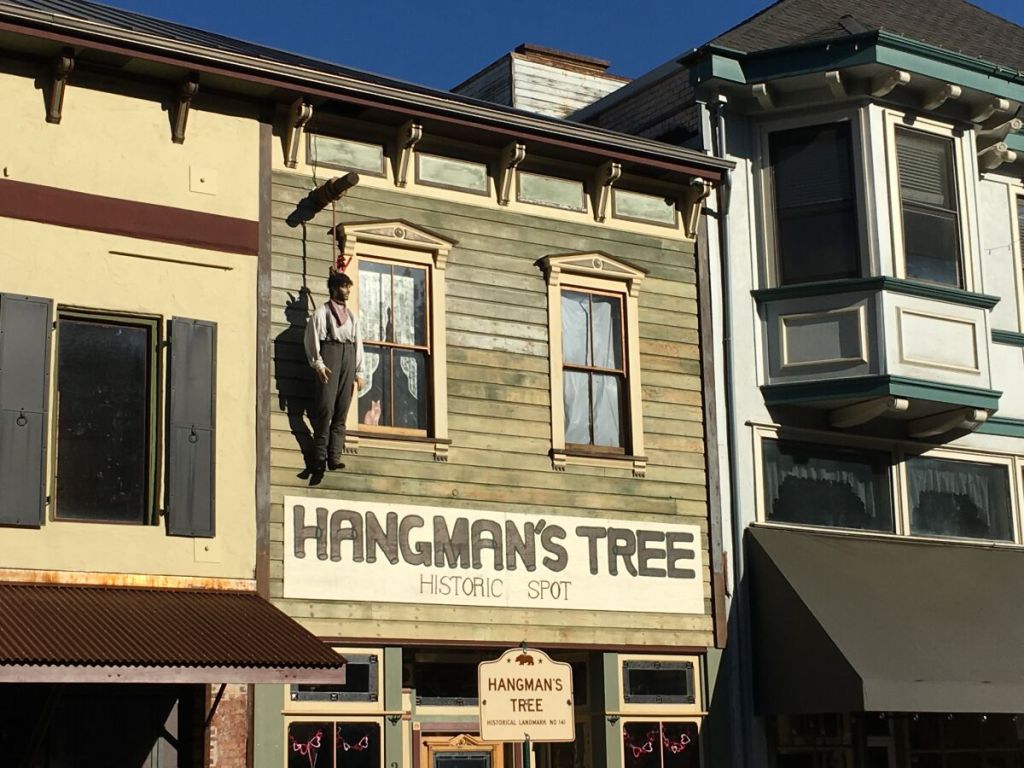
The Hangman’s Tree Café sits on the site of the towns original hanging tree and although the tree was cut down to make room for construction the roots were never removed. Some believe that this tends to add fuel to the paranormal fire. According to employees and patrons the bar is alive with otherworldly activity. There are full bodied apparitions of people dressed in clothes from days gone by. Glass ware and furniture move of their own accord and patrons are mysteriously locked in the bathroom only to be let out and to find that there is no one else around.
Placerville is a town that at first glance looks as though it has been forgotten by time. While strolling its historic streets, it is not hard to let your imagination take you back to a lawless time before computers and cars, even before phones. Looking at the old buildings it is not hard to imagine that you could actually travel back to those days of miners and prospectors. Maybe this is why the town is so haunted. Maybe the ghosts just see no reason to leave, after all they haven’t changed, and aside from a few less hangings, neither has the town.
Make a one-time donation
Make a monthly donation
Make a yearly donation
Choose an amount
Or enter a custom amount
Your contribution is appreciated.
Your contribution is appreciated.
Your contribution is appreciated.
DonateDonate monthlyDonate yearly Jeffery W. McKelroy
Leave a comment