by Jeffery W. McKelroy
Everyone knows the crown jewel of the Gulf Coast is New Orleans, but there is another.
Biloxi, Mississippi with its pristine beaches and stately homes at one time was the capitol of La Louisiane. The original French settlement in the area was established in 1699 in what is now the nearby community of Ocean Springs.
Native Americans have occupied the coast where Biloxi is located since around 8,000 BC and the city gets its name from the Natives that called this area home when the French arrived. The native population began to decline after the arrival of Europeans. Artifacts left behind by the Native tribes are still found on beaches and in the backyards of homes all around Biloxi and the surrounding communities.
Biloxi remained the capital of French Louisiana until 1723 when it was transferred to New Orleans as the original French intent with the settlement of the area was to establish a port at the mouth of the Mississippi River. In 1763 the French ceded its territory east of the Mississippi to England. In 1779 the Mississippi Coast was ceded to Spain. In 1810 Biloxi became part of the short-lived Republic of West Florida. In 1817 Mississippi became a State and between 1817 and 1860 Biloxi began transforming into a favorite summer resort vacation spot for many southerners. In 1838 Biloxi was incorporated and in 1848 the Biloxi Lighthouse was erected and would become the symbol of Biloxi. By the mid 1800’s the Biloxi economy was booming and along with it the hotel industry.
In 1861 Mississippi, at the beginning of the Civil War, seceded from the United States. The Biloxi Rifles organized in the city and were part of the 3rd Mississippi Infantry CSA, which was made up of Mississippi Gulf Coast Natives. It was a very short-lived military unit. On December 31, 1861, Biloxi surrendered to Union Naval Forces who were stationed on Ship Island.
The years immediately following the war were difficult economic times for the southern states. By the turn of the century Biloxi had become the Seafood Capital of the World. In the 1920s there were more than 40 seafood factories occupying the two cannery districts. Some of the first fishermen were Austrians from the Dalmatia Coast. In 1890 the Bohemians became the first imported laborers from Baltimore. In 1914 the first Cajun families arrived from Louisiana.
In 1908 the first Mardi Gras Parade took place in Biloxi. In 1927 Biloxi hotels included the Edgewater Gulf Hotel, White House Hotel, Tivoli Hotel, Buena Vista Biloxi Hotel, Kennedy Hotel, Park Hotel, Avelez Hotel, and Rivera Hotel. Also, in 1927 the seawall was constructed in Biloxi. Between 1934 and 1947 a Coast Guard Air Station was located on Biloxi’s Point Cadet. In 1941, Biloxi was the site for an Army Air Corp technical training base known as Keesler Field. Keesler Field would eventually become Keesler Air Force Base.
Hurricanes have frequently devastated the Mississippi Coast. Some of the most notable were the 1722, 1893, 1915, and 1947 hurricanes. On August 17, 1969, Hurricane Camille dealt Biloxi a catastrophic blow, but just as before Biloxi came back stronger. After Hurricane Camille, the economy of Biloxi recovered, but slowly. All that changed in 1992 however, when the State of Mississippi chose to allow legalized dockside gaming. Biloxi appeared to be on a fast growth path with nothing to slow it down. Then on August 29, 2005, Hurricane Katrina brought all of that to a standstill but again Biloxi was rebuilt and today is just as beautiful and just as much fun as it always has been.
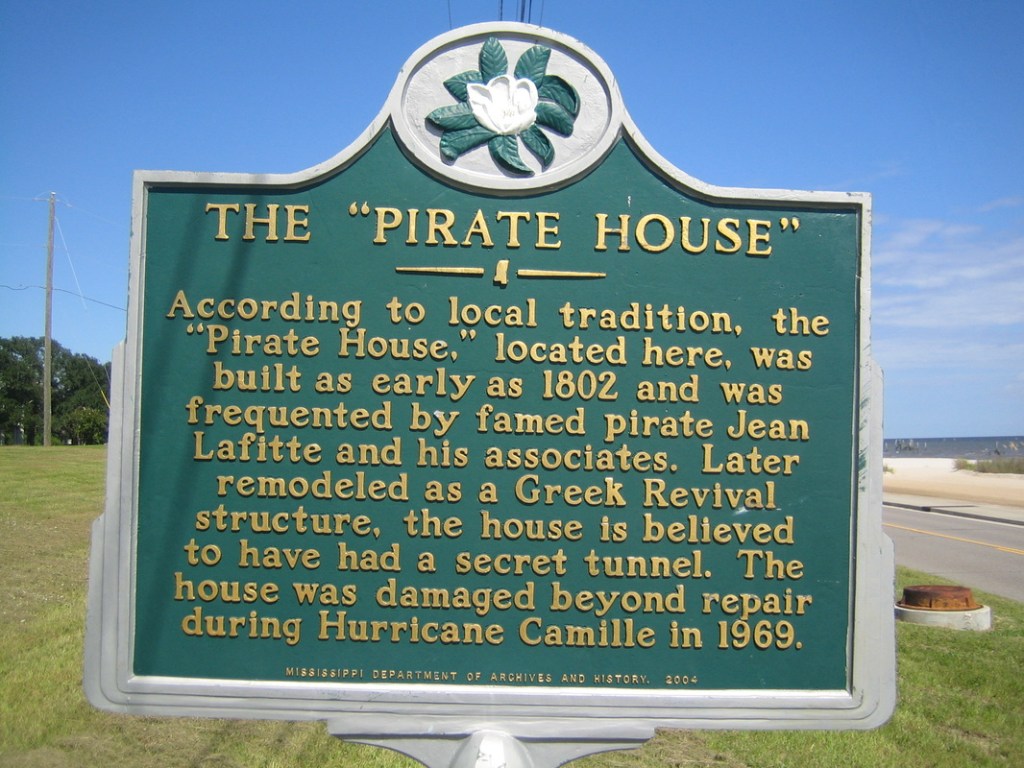
Although Biloxi is the kind of place people are drawn to for fun in the sun it also has a dark side. Like any other coastal town, Biloxi has its history of violence and intrigue. It has always been susceptible to storms which is why the local Indians lived on the back bay where they were somewhat protected, but they kept their fishing camps on the Gulf of Mexico side. They knew that death from the sea was always a possibility. Pirates frequented the barrier islands and occasionally the mainland of Biloxi. It is said that the Pirate Jean Lafitte had a house, just down the road, in Waveland. Many of the older locals remember the house and the secret tunnel that led from under the house to the Gulf where illicit goods could be moved back and forth unseen. The pirate house has since succumbed to storm winds and the raging sea. The civil war brought mostly economic strife and occupation to Biloxi and there are a few local boys buried in the Confederate Cemetery. During the widening of Hwy 90 near the lighthouse a forgotten graveyard was uncovered. Those at rest were the original colonists and it appeared as though those buried there died during some long-forgotten epidemic. And then there is Hurricane Katrina that destroyed 20% of the town and killed 53 of its residents.
Any city with this much history must also have its ghosts. In fact, it seems that all the nearby communities have a ghost story to tell. Like all urban legends there are several versions of these stories but all of them are rooted in some sort of truth.
In the quaint nearby town of Gautier, the Garden of Hope Cemetery, also known as Franklin Cemetery, stands as a testament to the town’s heritage. It is a place where the living tread lightly out of respect and maybe fear because it is said, the dead hold court when the sun dips below the horizon. It is said to be the home of at least 4 ghosts that like to make their presence known. Cheryl Anne, the spirit of a young girl, a specter of innocence, dances among the tombstones, her laughter a soft melody on the wind. She is a friendly ghost, a gentle soul who met an untimely end at the hands of her abusive father, Hal. His spirit, twisted by his heinous act, is said to roam the graveyard in eternal torment, his presence a cold shadow that chills the bones of the living. It is Bloody Sarah who strikes fear into the hearts of those who dare to wander too close to the graveyard at night. Her dress, stained with the essence of her life, flutters in the ghostly breeze as she plays her menacing pranks. She enjoys jumping out at passing drivers who swerve, thinking they have struck the phantom girl, only to see her rise with a cackle and vanish into the night. Another well-known phantom, the Gravedigger, once a caretaker of the dead, now plunders their resting places. His crypt, hidden among the ancient stones, is said to be a trove of stolen mementos. It is said that he comes out at night to gather items from other graves and bring them back to his own. Those who see him hitchhiking speak of a chilling encounter. Those who have given him a ride say that he is rather talkative, but the ride always ends the same. He will gaze out the window, mention his sorrow over no longer being alive and then he fades away.
Howard Memorial Hospital is no longer located in its original building. Today the building houses the Gaming Commission but for a time was abandoned. Floyd, one of the former security guards at the hospital, after it was closed, spoke to me at length about his experiences. Its halls, once filled with the sounds of healing, now echoed with the mischievous giggles of two young ghostly girls. They toyed with the remnants of the hospital’s machinery. The eerie silence was occasionally interrupted by the soft whisper of a voice that seemed to come from nowhere. Today employees of the Gaming Commission report seeing the ghost girls skipping down the hallway or hearing whispering and giggling in the restroom only to go in and find no one there. Others tell of seeing “shadow people” in many different places throughout the building.
Although long gone, the remnants of Jean Lafitte’s mansion hold secrets as deep as the Gulf itself. Tunnels, now collapsed and sealed, once snaked their way to the water’s edge, a silent witness to the passage of ill-gotten treasures and the sorrow of souls bound for New Orleans. The manor, once grand and imposing, harbored darkness within its walls. Rumors of a dungeon, where the clank of chains and the cries of the imprisoned echoed, still haunt the town of Waveland. Though Hurricane Camille has long since claimed the structure, the spirits of three prisoners, wronged and restless, roam the grounds, their silhouettes glimpsed in the moonlight. Many residents of Waveland talk of seeing dark, shadowy figures moving amongst the trees near where the house once stood.
Another haunted grand manor taken by the sea is the Tullis-Toledano Manor. In Biloxi, the ruins of Tullis-Toledano Manor tell a tale of love and tragedy. A duel, fought over the affections of a young maiden, left one suitor bleeding out upon the green. His spirit, bound by love and loss, wanders the property, his bloody shirt a stark reminder of the passion that once burned within his heart. Though Hurricane Katrina has erased the manor from the physical world, the ghostly duelist searches still, his blade at the ready, hoping to reclaim the love that was ripped from his grasp.
When the day is done, as the moon dips behind the gnarled branches of the ancient oaks, the spirits of Biloxi stir. In the ruins of Jean Lafitte’s mansion, the restless souls of the three ill-fated prisoners lurk in the darkness. Their footsteps, barely audible in the darkness, as they search for the hidden tunnels that once led to the Gulf. The pirate’s booty has likely long since been taken away, but their ethereal form still floats on the salty breeze and discourages would-be treasure hunters. At Tullis-Toledano Manor, the ghostly duelist stands by the well, eyes fixed on the moonlit sky, lost love, forever elusive.
The Spirits of Biloxi are woven into its very fabric. The living continue to share their tales, passing them down through generations, until they, too, became part of the spectral tapestry that adorned this haunted land. And so, in the quiet hours before morning, Biloxi sleeps, its streets echoing with the whispers of the departed. For in this coastal town, where the veil between worlds is often thin, the past and present dance together, forever entwined in a haunting waltz.
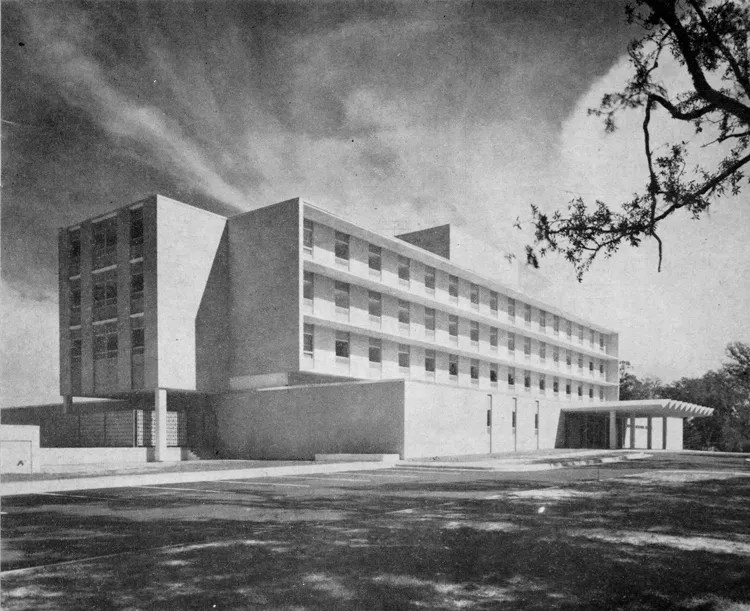
The old haunted hospital


Lighthouse and Visitor Center
Make a one-time donation
Make a monthly donation
Make a yearly donation
Choose an amount
Or enter a custom amount
Your contribution is appreciated.
Your contribution is appreciated.
Your contribution is appreciated.
DonateDonate monthlyDonate yearly Jeffery W. McKelroy
Leave a comment