by Jeffery W. McKelroy
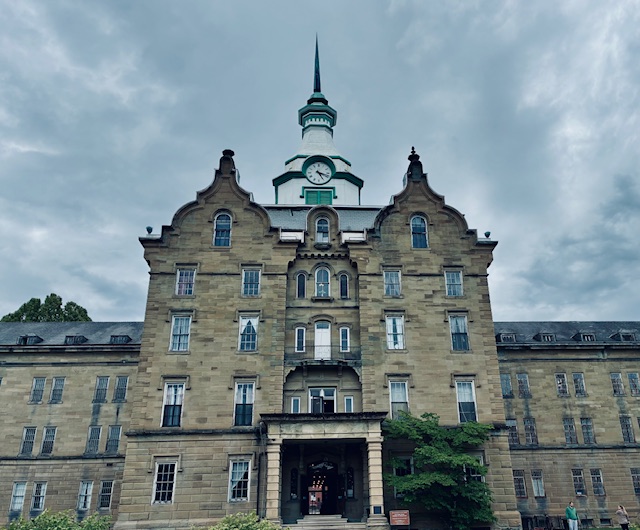
The pale stone facade of the Trans Allegheny Lunatic Asylum broods over the quiet town of Weston, West Virginia, its spires clawing at the restless Appalachian sky. Time has softened the edges of its imposing Victorian architecture, but not the sense of mystery that clings to every corridor. Within these walls echoes linger—whispers of the past, footfalls of the forgotten, laughter and weeping intertwined like the ivy that crawls across the crumbling windowsills.
Once, this grand asylum promised sanctuary and healing to those lost in the labyrinth of their own minds. Now, its empty halls invite questions: Who walked these shadowed corridors? What secrets were locked behind iron doors? And what stories, both tragic and hopeful, wait to be unearthed beneath the weight of silence and stone?
As dusk settles and the bats begin their nightly ballet, we step inside—past the thresholds of history and rumor, into a world where reality and imagination blur. This is not merely a tale of bricks and mortar, but a journey into the heart of the unknown, where every whisper may hold a clue, and every shadow a name.
The Trans Allegheny Lunatic Asylum was also known as the West Virginia Hospital for the Insane and Weston State Hospital. It first opened its doors to patients in 1864 and operated continuously until 1994. The architect, Richard Snowden Andrews, based his design on the Kirkbride Plan. The Kirkbride Plan was a system of mental asylum design advocated by American psychiatrist Thomas Story Kirkbride in the mid-19th century. The structural features of the hospitals were contingent on his theories regarding the healing of the mentally ill, in which environment and exposure to natural light and air circulation were crucial. Originally designed to accommodate 250 patients, the population of the hospital reached 2,400 by the 1950’s.
Construction of the hospital began in late 1858 and was initially conducted by prison laborers. Most of the building materials were sourced locally, including the blue sandstone from a quarry in Mount Clare, West Virginia. Skilled stonemasons from Germany and Ireland were also employed for construction.
The construction of the hospital was interrupted by the outbreak of the Civil War in 1861. Following the secession of the state of Virginia from the United States, the Confederate government demanded the return of the hospital’s unused construction funds for its defense. However, before this could occur the Union Army dispatched the 7th Ohio Volunteer Infantry to seize the money from a local bank, delivering it to the city of Wheeling. The money was set aside for use by the Virginia government who remained loyal to the Union, also known as the Restored Government of Virginia. These funds were designated as a “start-up treasury” for what would become a new Union state. Funding was appropriated from this established treasury for the hospital’s continued construction in 1862.
While some construction was accomplished during the war, the grounds and buildings were often occupied by both Union and Confederate military and building supplies were taken by Confederate raiders. Following the admission of West Virginia as a U.S. state in 1863, the hospital was renamed the West Virginia Hospital for the Insane. The first patients were admitted in October 1864, but construction continued into 1881. The 200-foot central clock tower was completed in 1871. The hospital was intended to be self-sufficient, and a farm, waterworks, and cemetery were located on its grounds.
Patients were admitted to the asylum for a variety of reasons, including asthma, laziness, egotism, domestic troubles, and even greediness. This led to an overwhelming number of patients being admitted, causing the asylum to face a shortage of staff and beds.
Originally designed to house 250 patients in solitude, the hospital held 717 patients by 1880; 1,661 in 1938; over 1,800 in 1949; at its peak, 2,600 in the 1950s in overcrowded conditions. A 1938 report by a survey committee organized by a group of North American medical organizations found that the hospital housed “epileptics, alcoholics, drug addicts and non-educable mental defectives” among its population. A series of reports by The Charleston Gazette in 1949 found poor sanitation and insufficient furniture, lighting, and heating in much of the complex, while one wing, which had been rebuilt using Works Progress Administration funds following a 1935 fire started by a patient, was comparatively luxurious.
The lack of proper care and access to sanitation led to many deaths at the asylum. While the official count of patients who have died in the asylum is not available, Weston State Hospital expert and historian Titus Swan estimates the number to be in or above the five figure range.
Weston State Hospital found itself to be the home for the West Virginia Lobotomy Project in the early 1950s. This was an effort by the state of West Virginia and Walter Freeman to use lobotomy to reduce the number of patients in asylums because there was severe overcrowding.
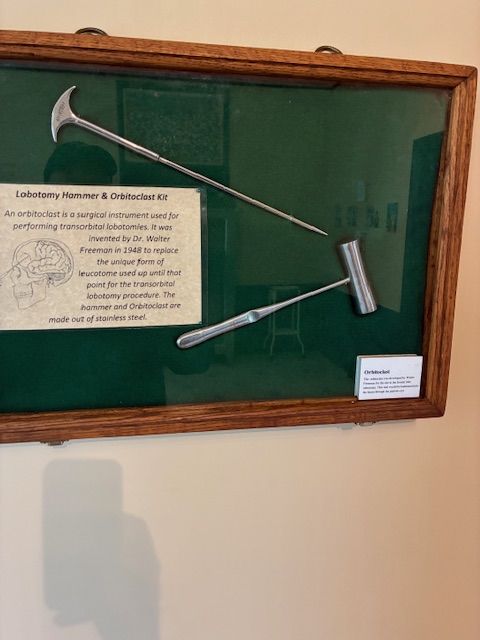
At the peak of his career, Walter J. Freeman II was a celebrated physician and scientist. He served as the first chairman of the Department of Neurology at George Washington University and was a tireless advocate of surgical treatment for mental illness. Walter Freeman performed approximately 3,439 lobotomies during his career. He is known for popularizing the transorbital lobotomy, sometimes referred to as the “ice pick” lobotomy, performing around 2,500 of these procedures himself. Freeman’s lobotomies were performed on patients in at least 23 states.
In 1936 Freeman performed his first lobotomy but by 1945 Freeman had begun to lose confidence in the effectiveness of standard lobotomy, and thus he set to work on refining a procedure known as transorbital lobotomy, which was not only less expensive and faster than standard lobotomy but also, Freeman believed, more effective. Transorbital lobotomy was first attempted in 1937 by Italian psychosurgeon Amarro Fiamberti. Fiamberti performed the operation by forcing a thin tube (cannula) or a leukotome through the bony orbit at the back of the eye socket and injecting alcohol (or formalin) into the frontal lobe. Instead of a tube and alcohol, Freeman’s instrument of choice to penetrate through the bone was initially an ice pick and later a specially designed leukotome, which he manipulated by hand to destroy the neuronal tracts in the brain that were thought to give rise to mental illness. In January 1946 he performed his first transorbital lobotomy procedure, operating on a depressed and violent 29-year-old woman. The procedure was deemed a success; the patient was able to return to a relatively normal life.
Freeman developed a lobotomy traveling road show. He traveled all over the country performing lobotomies not only at hospitals but also in hotel rooms and private homes. Of the thousands of lobotomies he performed or supervised during his career, an estimated 490 individuals died because of the treatment. His attitude and fatality rate, combined with his lack of interest in describing a scientific basis for the procedure, left him with little respect in the medical community.
The transorbital lobotomy procedure, which Freeman performed very quickly, sometimes in less than 10 minutes, was used on many patients with relatively minor mental disorders that Freeman believed did not warrant traditional lobotomy surgery, in which the skull itself was opened. A large proportion of such lobotomized patients exhibited reduced tension or agitation, but many also showed other effects, such as apathy, passivity, lack of initiative, poor ability to concentrate, and a generally decreased depth and intensity of their emotional response to life. Some died as a result of the procedure but this was of no concern to Freeman.
In 1952 Freeman performed 255 lobotomies in a 12 day period at the Weston State Hospital.
By the 1950s the asylum was very overcrowded. As the asylum became more crowded and the staff were outnumbered, conditions worsened, and more incidents occurred between the patients. A few of these incidents include setting fires, attempted hanging (which led to a murder with a bedframe), and one nurse even went missing only to later be found dead at the bottom of a set of unused stairs.
By the 1980s, the hospital had a reduced population due to changes in the diagnosis and treatment of mental illness. Those patients who could not be controlled were often locked in cages. In February 1986, the Governor announced plans to build a new psychiatric facility elsewhere in the state and convert the Weston hospital to a prison. Moore authorized work to begin on the prison conversion, but the state found the move to be unconstitutional, and work was suspended. Ultimately the new facility was built in Weston and the old Weston State Hospital closed in May 1994. The closure came by court order due in part to a class action lawsuit filed by family members of patients.
Over the years, patients were admitted for various reasons, and not all were mental health related. In addition to patients who were admitted for mental health related issues, other admission reasons include asthma, women who would not listen to their husbands, tuberculosis, men could even drop off their wives for almost any reason.
Over the long history of the asylum there were many violent acts that took place and many that lived there suffered through sadness and hopelessness. One hopeless case was Margaret. In West Virginia in the 1940’s it was perfectly legal for a husband who was not happy with his wife to have her committed and under the law this would dissolve the marriage. This was Margarets fate. Her husband had found a new love and rather than go through the trouble and financial hardship of a divorce he simply had Margaret committed. The process was simple. He brought her to the hospital in the morning, gave the doctor his list of complaints, the doctor agreed and she was admitted. By that afternoon her now free husband was married to another woman. It was all legal and Margaret knew that she would never leave. Her life was over. She hung herself on the same day she arrived. Although she may have wanted to save herself a lifetime of torment it seems as though her spirit may yet wonder the old halls of the hospital that was to be her prison. Staff and visitors have often reported seeing her spirit floating in and out of her room. Some have heard sobbing coming from the room where she was supposed to live the rest of her life. Is it her? Is she still here or was her sadness so deep that it seeped into the walls of the building itself.
There were many murders at the asylum and eyewitnesses believe the spirits of the victims and the murderers still haunt the grand old building. On one of the floors where a ghastly murder took place there have been numerous sitings of shadow figures darting in and out of rooms, disembodied voices and strange foul smells. Some attribute the ghostly sightings to the murder of a patient known as Dean by two other patients named Big Jim and David Mason. Big Jim had previously been suspected in the murder of another patient, but no one could prove it. The murder of Dean was so horrific that it was indisputable who the culprits were. For reasons unknown Big Jim and David attempted to hang Dean but when the bed sheets they were using tore they resorted to more ruthless tactics. They placed Deans head under the leg of a bed frame and jumped on it until the leg went through their victim’s skull making contact with the floor. Now it is said that the spirits of all three men roam the halls. The shadow figures, reported to be the two murderers, are seen frequently by visitors and employees. Dean seems to be very vocal and his voice has shown up on audio recordings.
On the first floor, there was a female patient named Ruth. She resided in the Civil War wing with the veterans. According to legend, she hated men with an extraordinary rage. To this day, some people say that she will throw things at men if given the chance.
Another spirit that has ties to the civil war is Lily. Lily is one of the most well-known ghosts. A young woman named Gladys was sent to the asylum after being raped by Union soldiers. After she was admitted it was discovered that she was pregnant. Gladys passed during childbirth, leaving her infant child alone. The nurses in the ward immediately took to the little girl, naming her Lily. The asylum was now her home. When Lily was nine years old, she contracted pneumonia, which ultimately killed her. Now visitors to Lily’s room bring her toys, stuffed animals, and candy. Witnesses say that the toys will sometimes move and even the candy will disappear.
Similar to the strange occurrences in Lily’s room, there is a room where the spirit of a long- suffering alcoholic seems to still reside. Visitors leave small bottles of booze and cigarettes which also seem to disappear. Occasionally the smell of alcohol or cigarette smoke lingers in the air.
The patients aren’t the only spectral residents of the old hospital. The ghosts of two nurses have been seen. The identity of one of the nurses is unknown. She is seen moving around from room to room as if making her rounds. Sometimes she is heard humming or whistling. She has also been seen standing in the nurse’s station on the ground floor. Another nurse was murdered in the 1970’s. Her body was found at the bottom of a stairway and the murderer was never caught. She is often seen standing near the stairs where her body was found.
One murder that occurred in the 1970’s was carried out by an unlikely teenager. Housed on the adolescent wing, a 15-year-old boy was regularly bullied by a 17-year-old delinquent. No matter how many times he asked for help the bullying never stopped. The younger boy eventually grew tired of the constant harassment. He fashioned a shank out of a spoon and then waited for just the right time. He saw his opportunity when he and the bully were alone in the bathroom of their wing. The bully sat down in a stall to do his business. There isn’t much room in the stalls. They are very small, and the half door opens inward. The younger boy was able to rush the older boy, trapping him in the stall by leaning against and over the half door. He stabbed him furiously and repeatedly with the shank. He stabbed him in the face and torso. The bully was blinded in one eye and the shank slashed at his neck. The younger boy finally stopped, realized how much damage he had done and ran off. The bully was able to get to his feet and stumbled into the hallway where he collapsed and died. His apparition is seen frequently in the hallways and sometimes standing at the window of his old room, looking out with his arms folded.
After the Civil War, veterans who were committed to the asylum were housed in the Civil War section of the building. Their spirits are seen there, and the sounds of laughter are heard coming from some of the dark and abandoned rooms. Some witnesses have reported seeing the spirits of Civil War soldiers in the graveyard on the property.
Today the Trans-Allegheny Lunatic Asylum is a museum, a tourist attraction and a haunted destination for ghost hunters from around the world. It is a testament to how far we’ve come in our treatment of the mentally ill and a reminder of brutal times gone by. It was not that long ago that both living patients, and the spirits of the dead roamed these halls together. Now only the dead remain.
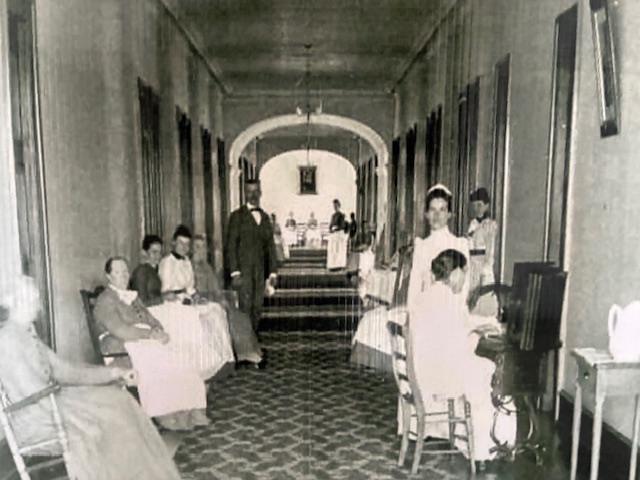
The early years of the Trans Allegheny Lunatic Asylum

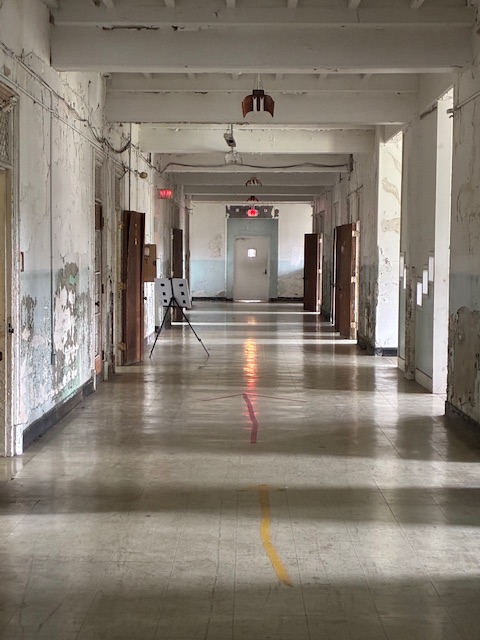
Looking toward the nurses station where the apparition of a nurse is sometimes seen.
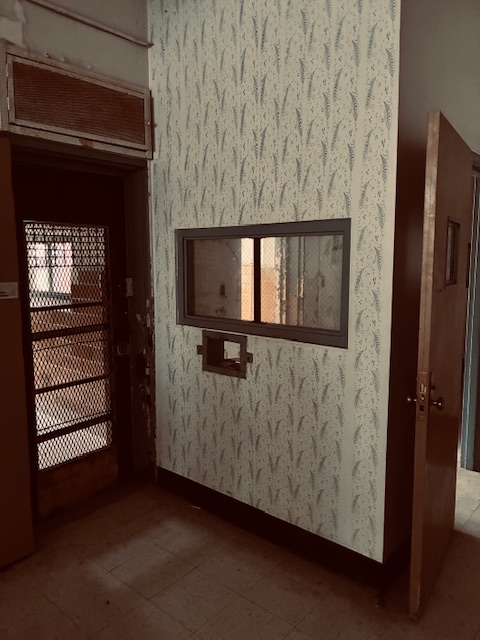
Ghost hunters who have encountered the phantom nurse, working at this station, call her Elizabeth.
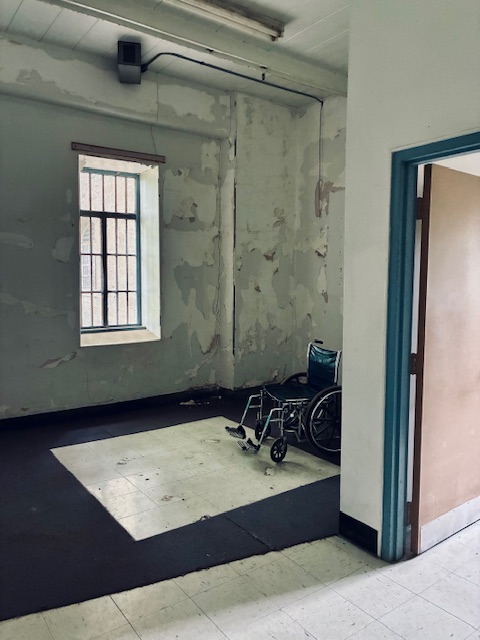
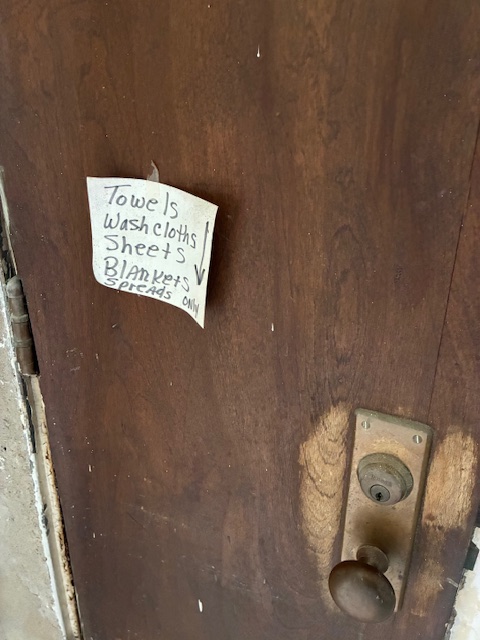
Hand written notes and signs are still present.
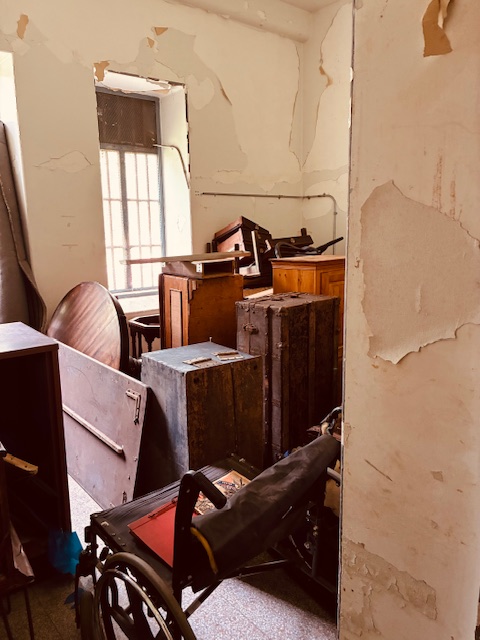
Forgotten luggage
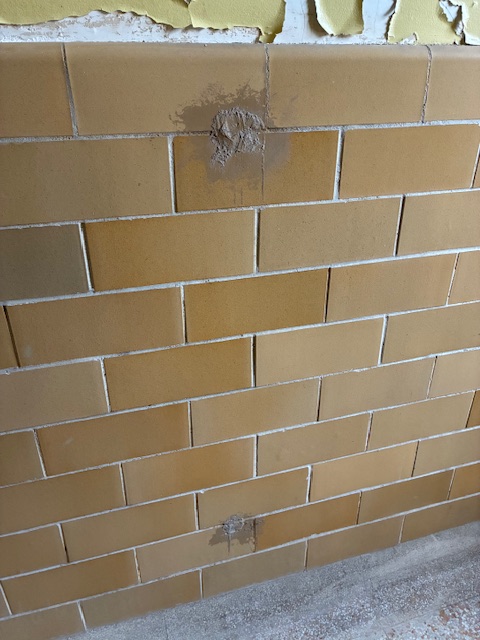
Patients were chained to the walls by their arms and legs in the shape of an “X”, suspended in the middle of the room. In the 1980’s they removed the chains and patched the walls.
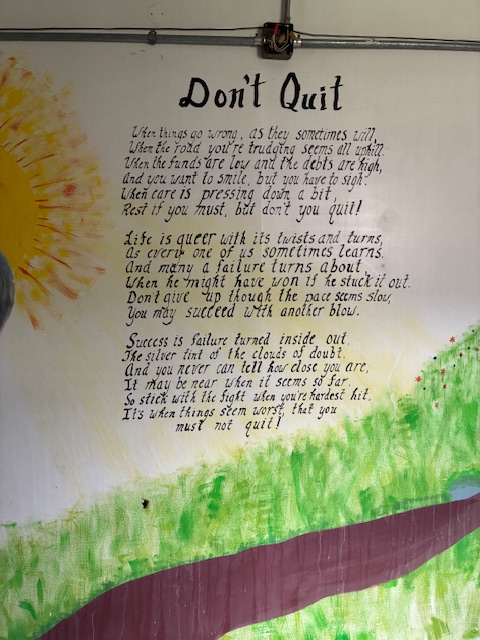
Patient art work.
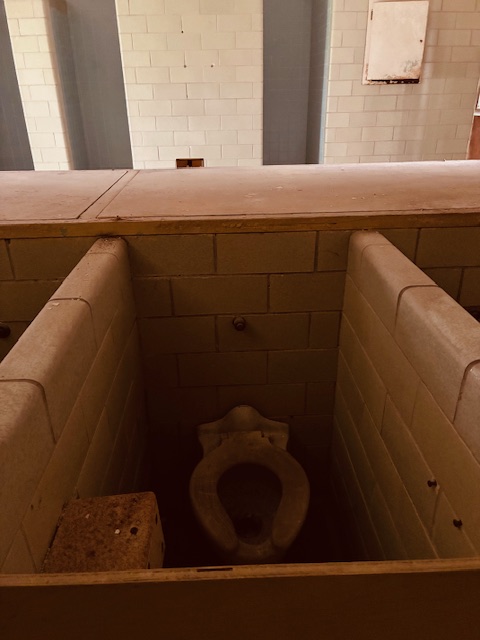
Where a bully met his end.
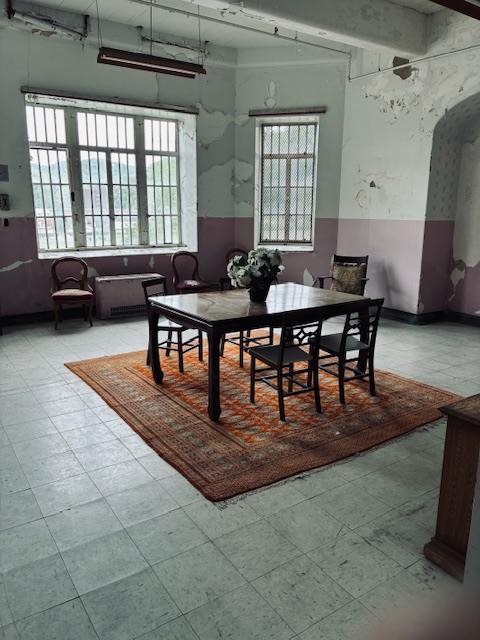
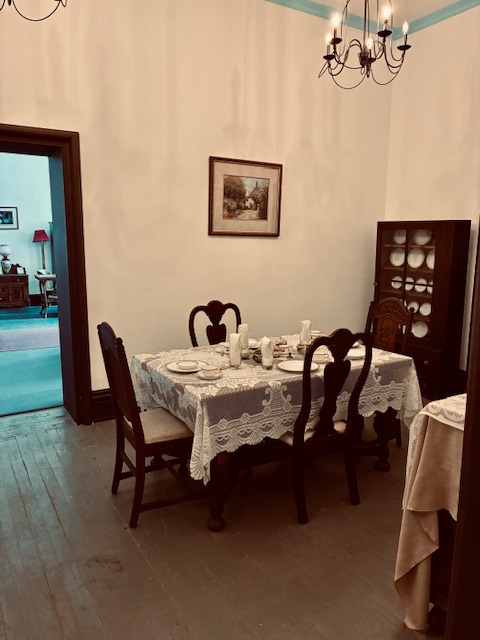
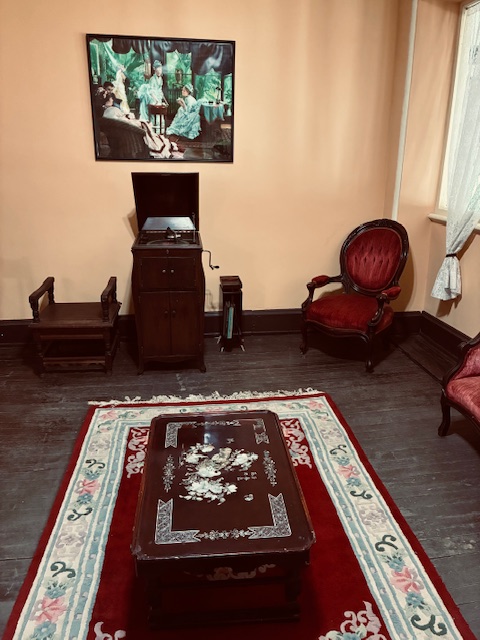
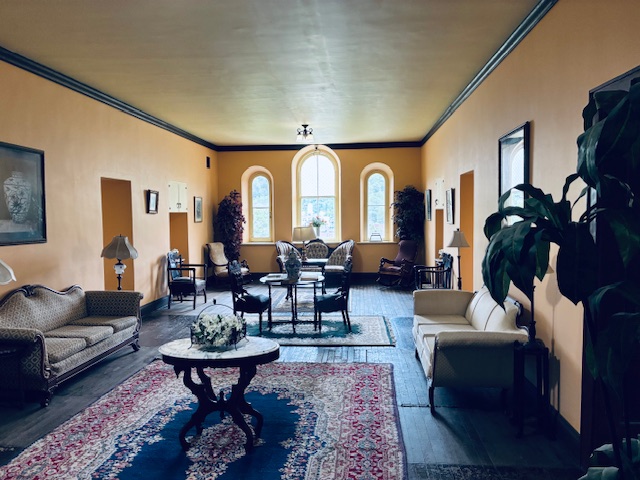
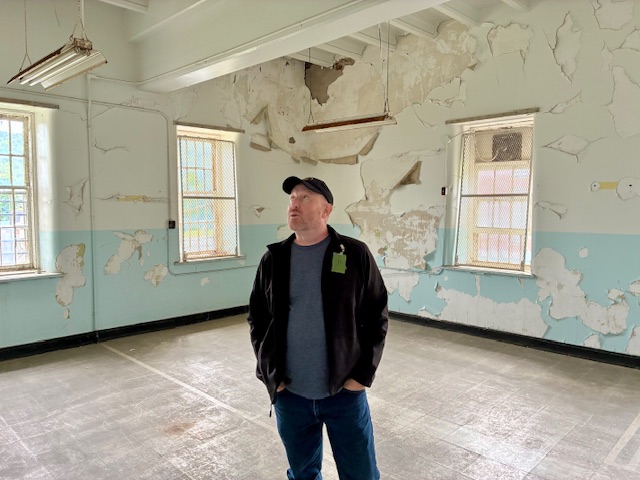
The author exploring.
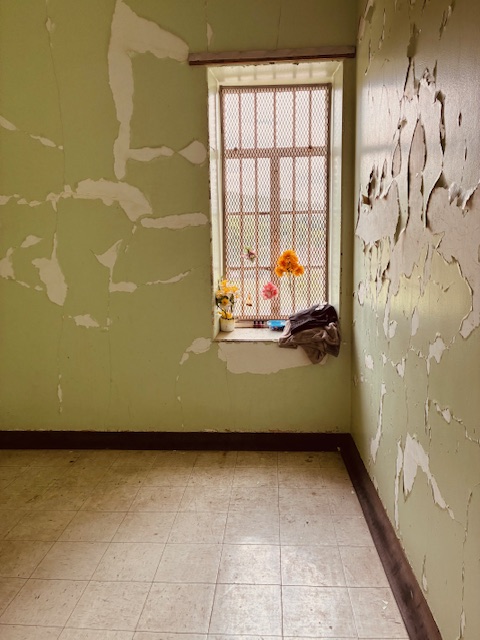
The room where an abandoned wife hung herself on her first day.
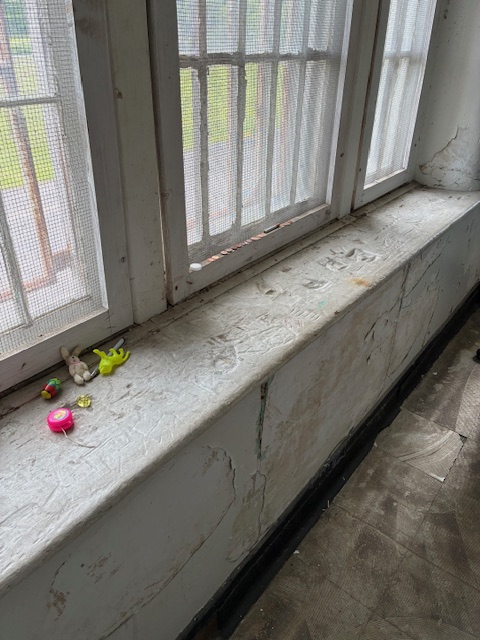
The adolescent wing. The images and words carved into the window sill with their finger nails are still visible.
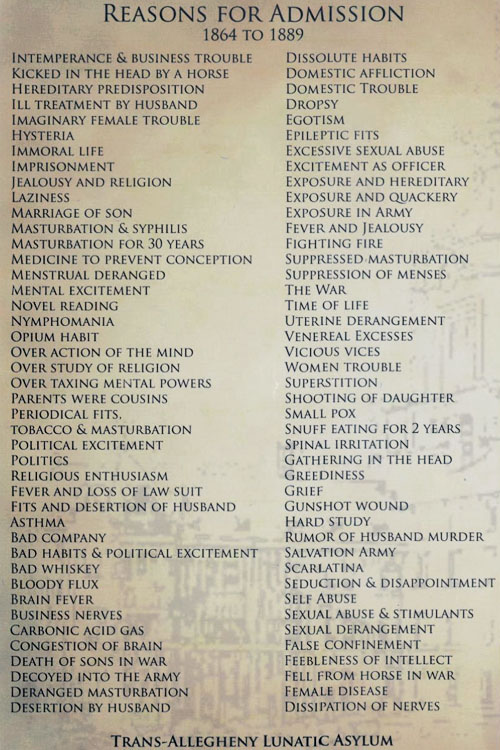
Reasons for admission from individual patient records.
Make a one-time donation
Make a monthly donation
Make a yearly donation
Choose an amount
Or enter a custom amount
Your contribution is appreciated.
Your contribution is appreciated.
Your contribution is appreciated.
DonateDonate monthlyDonate yearly Jeffery W. McKelroy
Leave a comment