by Jeffery W. McKelroy
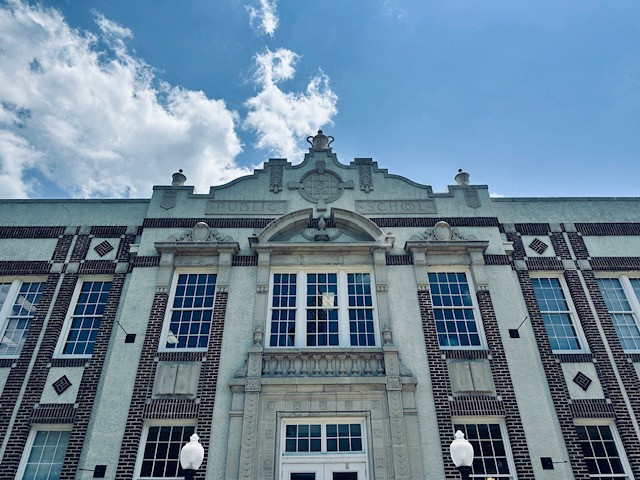
Mary C. O’keefe Cultural Arts Center, Ocean Springs, MS.
The Haunting of Ocean Springs
Ocean Springs, Mississippi has a history stretching back more than 300 years and is one of the oldest European-settled communities on the Mississippi Gulf Coast.
The area’s recorded European history began in 1699, when French explorer Pierre Le Moyne d’Iberville established Fort Maurepas on the eastern shore of Biloxi Bay. The settlement was part of France’s effort to establish control over the territory claimed as Louisiana. The area had long been inhabited and used by Native American peoples before the arrival of the French.
The French settlement was relatively short-lived. By the early 1700s, French colonial activity had shifted toward Mobile and later New Orleans. The old settlement became known as Vieux Biloxi, or Old Biloxi, and the area passed through British and Spanish control before becoming part of the United States in the early 1800s.
During the 19th century, the community developed from a small fishing, farming, lumbering, and charcoal-producing settlement into a resort town. Steamboat service connecting the Gulf Coast with New Orleans helped bring visitors to the area during the 1820s and 1830s. In the 1850s, mineral springs near Fort Bayou attracted visitors seeking the reputed health benefits of the waters. A hotel built in 1853 helped establish the name Ocean Springs, which became the community’s official name in 1854.
The arrival of the railroad in 1870 greatly increased tourism and commerce. Ocean Springs became a popular summer destination for visitors from New Orleans and elsewhere, particularly because of its climate, bayfront setting, fishing, and reputation as a refuge from yellow-fever epidemics. Grand homes, hotels, and boarding houses were built throughout the community. The commercial center gradually shifted from the waterfront toward Washington Avenue and the railroad depot.
Ocean Springs was incorporated as a city on September 9, 1892. During the 20th century, the community increasingly became known not only as a resort town but also as an arts community. The Anderson family played an important role in that transformation. Walter Inglis Anderson, one of Mississippi’s best-known artists, created paintings, murals, and pottery inspired by the Gulf Coast’s wildlife and natural environment. His family’s Shearwater Pottery, founded by his brother Peter in 1928, became an important part of Ocean Springs’ artistic heritage.
The city also developed an important maritime and military history. During World War II, a harbor in Ocean Springs was used to shelter an Army Air Corps crash-boat squadron whose mission was to rescue pilots who went down during Gulf training flights.
Today, Ocean Springs combines its French colonial origins, Gulf Coast maritime traditions, historic architecture, resort heritage, and strong arts culture. Historic neighborhoods, live-oak-lined streets, museums, galleries, and waterfront parks help preserve that history. The city has also continued to grow, including a major annexation in 2024 that added approximately 5.9 square miles and more than 1,700 residents.
In short, Ocean Springs evolved from a 1699 French colonial outpost into a 19th-century resort community and, eventually, a distinctive Gulf Coast city known for its history, architecture, maritime traditions, and arts. It would also seem that over 300 years of history has left a paranormal mark on the city as well.
There are some buildings that seem to hold memories. The Mary C. O’Keefe Cultural Arts Center in downtown Ocean Springs is housed in one of them.
In a time before the galleries, theater performances, art classes, and community events, the building at 1600 Government Street was the Ocean Springs Public School. Constructed in 1927, its halls were once filled with the voices of children, the footsteps of teachers, and the ringing of school bells and, according to local accounts, not everyone who walked those halls ever truly left.
One of the oldest stories concerns a man named A.G. Foster, who worked as a janitor from the day the school opened in 1927. Accounts of Mr. Foster describe a kind man who loved his work and his community. In December of that year, he was cleaning windows on the second floor. No one knows how he fell but his injuries were terrible and eventually fatal. He never recovered and passed away in January of 1928. Over the decades, people began reporting strange occurrences inside the old school. The theater became one of the places where stories accumulated.
Witnesses have reported hearing unexplained noises backstage. Doors have reportedly opened and closed on their own, despite being difficult doors to move. Some have described seeing unexplained lights or flashes of color in the darkness. Then there is the story of the gallery.
According to Pat Pinson, who has worked with the history of the building, a former director was studying a Native American ceremonial burial pot when something happened that she could not explain. She was sitting in a chair, according to her account, something pushed her out of it. There was no one there. No person standing behind her. Nothing she could see that could have caused it. Just the sudden sensation of being physically pushed. That story might be dismissed as imagination—if it were the only strange thing ever reported at the Mary C. It isn’t. Visitors and investigators have continued to report unusual sounds and unexplained activity throughout the building.
During the day, the Mary C. is full of life but, at night, it is something else but, maybe the Mary C. isn’t haunted. Maybe every strange sound has an ordinary explanation. Maybe the old doors are simply old doors. Maybe the shadows are just shadows and, maybe the stories passed down through Ocean Springs are nothing more than the imagination of people who have spent too much time inside a 99-year-old building after dark. Perhaps some places remember. Maybe the walls aren’t just listening, maybe they are recording. Perhaps the laughter of generations of schoolchildren left something behind. Perhaps the people who taught, worked, played, and died there became part of the building itself and, perhaps, when the lights go out and the last person leaves the Mary C., the old school isn’t empty. Maybe somewhere in those dark hallways, the janitor is still making his rounds.
This is just one of many stories of the paranormal in Ocean Springs. The Julep Room occupies the site of a former health spa that occupied the site of a natural spring that was once visited by local Native tribes. The Julep Room has a long history and wasn’t always the Julep Room but that was the name when Elvis found it early in his career. He loved to play on the water in Ocean Springs, he dated a local girl, and he held court at the Julep Room. Some patrons and employees say he still pops in from time to time, along with the spirits of Indians and explorers just passing through.
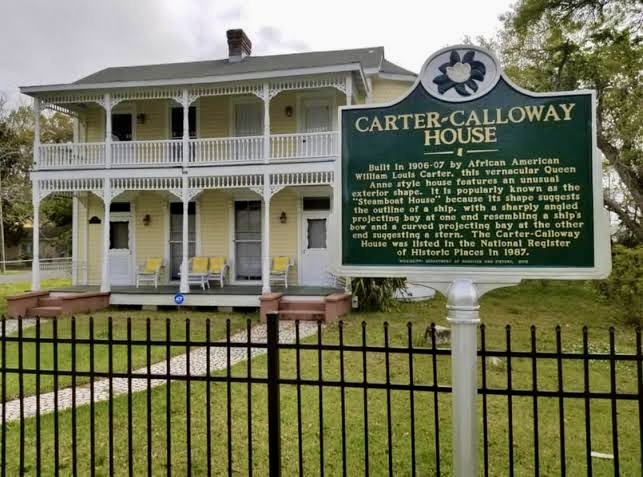
There is also ghostly lore surrounding the Carter-Callaway home on State Street, known locally as The Steamboat House. The home was built in the 19th century and shortly after its construction locals noticed that they could see strange shadowy figures moving along the roof line just before the occurrence of bad weather. There are no accounts of any tragic events on the property but the family that has owned the property since the 1940s believe it is haunted.
There are many more stories of phantoms and spectral beings in Ocean Springs. From the W.M. Seymour Cemetery to the Villa Maria apartments, built on the site of a tragic fire, it seems as though no matter where you are you may be sharing space with the spirits of those who built the town. If you ever take the time to sit on the beach and stare out at the sound you will see why, maybe, there are some spirits who choose to stay.
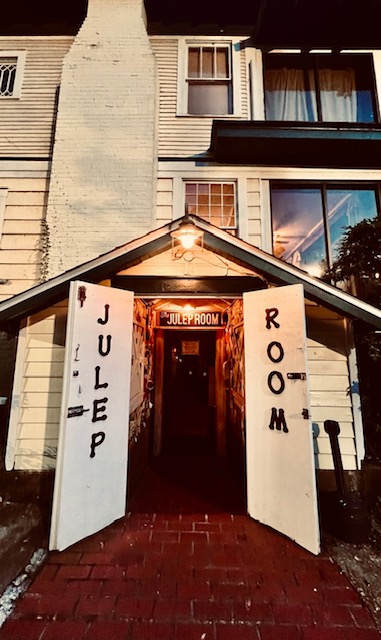
The Julep Room
Make a one-time donation
Make a monthly donation
Make a yearly donation
Choose an amount
Or enter a custom amount
Your contribution is appreciated.
Your contribution is appreciated.
Your contribution is appreciated.


Leave a Reply